

Introduction: The Java EE to Jakarta EE Evolution
For decades, enterprise Java projects have relied on the familiar javax.* namespace. However, the open-source evolution of Java EE – now Jakarta EE – has introduced a mandatory shift to the jakarta.* namespace. For developers and businesses, understanding the reasons behind this change, its implications, and how to smoothly migrate projects is essential to remain future-ready, secure, and innovative.
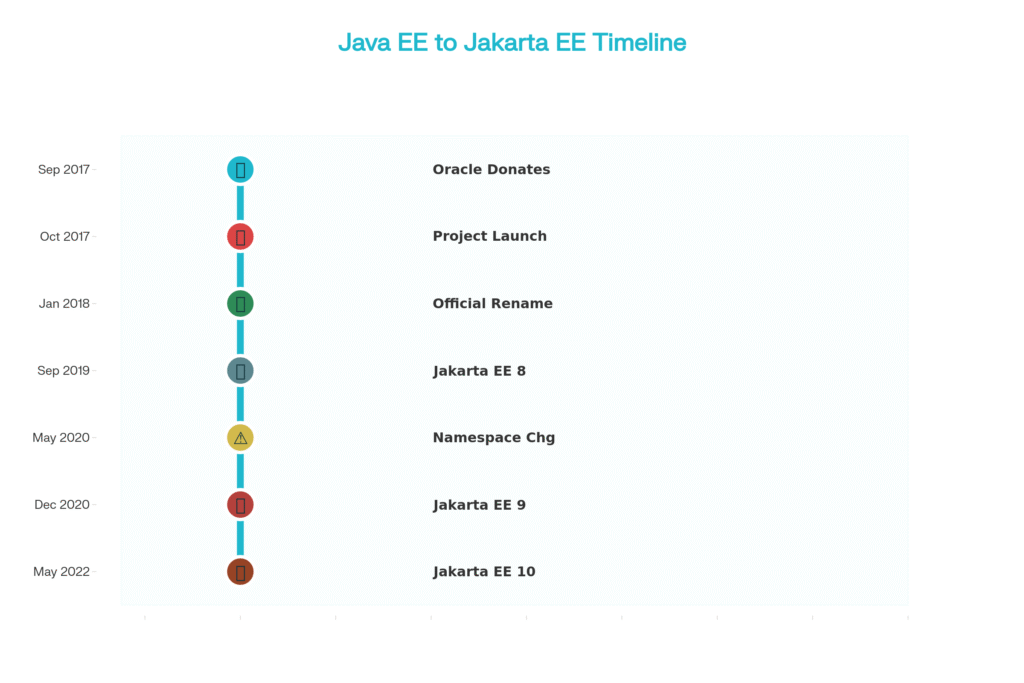
Understanding Jakarta EE: Why the Namespace Change?
Oracle’s Transfer to Eclipse Foundation
The origin of Jakarta EE dates to Oracle’s donation of Java EE technologies to the Eclipse Foundation. This move kickstarted a new era of community-driven, open governance and innovation. However, licensing agreements dictated that while the platform and technologies could evolve, changes to the javax.* namespace were not permitted for new features – forcing the ecosystem to use jakarta.* going forward.
What Does This Mean?
- All APIs, servlets, and related specifications from Java EE now reside in new packages:
jakarta.servlet,jakarta.persistence, etc. - All new developments – features, fixes, and releases – occur under Eclipse’s stewardship, continuously modernizing the platform.
- The transition signals the dawn of modern, cloud-native Java for enterprise use.
Key Reasons for the Shift
- Legal and License Compliance: Oracle retained rights over
javax.*. To innovate beyond legacy limitations, Eclipse Foundation needed a new namespace. - Community-Driven Innovation: Jakarta EE’s open-source governance model invites more contributors, faster releases, and robust vendor-neutral standards.
- Future-Proofing: The path to cloud-native Java, microservices support, and seamless integration with platforms like Kubernetes and Docker flows through Jakarta EE.
Implications for Java Developers and Enterprises
For Developers
- Source Code Refactoring: All import statements and dependencies on
javax.*must change to their newjakarta.*equivalents – potentially touching thousands of lines of code. - Dependency Upgrades: Libraries, frameworks (Spring Boot 3+, Quarkus 3+), and third-party integrations must align with Jakarta EE 9+ or risk incompatibility.
- Toolchain and Container Updates: Most popular app servers and tools (Tomcat 10, GlassFish 7, etc.) have adopted Jakarta EE, but old binaries require migration.
For Businesses and Projects
- Backward Compatibility Risks: Some legacy libraries tied to
javax.*may require additional support or rewrites. - Cloud-Native Modernization: Migrated applications gain enhanced performance, modularity, and security features in Jakarta EE 9+ releases.
- Vendor Neutrality: Open-source community ensures fast bug fixes, better documentation, and more robust long-term support than single-vendor stewardship.
How to Migrate: A Step-by-Step Guide
1. Audit Your Application
- Inventory All Dependencies: Identify where
javax.*is used; include source code, binary dependencies, XML configs, and Maven artifacts. - Assess Frameworks and Containers: Review compatibility for frameworks like Spring, Hibernate, and app servers.
2. Automated Tools for Migration
- Eclipse Transformer: Automates conversion of source code and binaries from
javax.*tojakarta.*; supports Java archives, manifests, class files, properties, and more. - Openrewrite: Refactors imports and class references in source code automatically, making large-scale migrations easier.
- Apache Tomcat JakartaEE Migration Tool: Especially for servlet-based apps; converts directories or archives (JAR, WAR, EAR) and removes cryptographic signatures as necessary.
- IntelliJ IDEA & Other IDEs: Built-in refactor/migrate options for faster package updates.
- Maven Shade Plugin: Can relocate packages for smaller libraries, not optimal for multimodule or dependency-heavy projects.
3. Manual Adjustments
- Edge Cases: Libraries not yet upgraded must be manually refactored or replaced.
- Maven Coordinates: Update group IDs and artifact names from
javax.*tojakarta.*(e.g.,javax.xml.bind:jaxb-api→jakarta.xml.bind:jakarta.xml.bind-api). - Configuration Files and Properties: Replace all references in XML, properties files, and manifest entries.
- Testing: Comprehensive testing required to verify no unexpected consequences from automated changes.
4. Update and Test Your Frameworks
- Ensure all frameworks (Spring, Hibernate, JPA, web containers) support Jakarta EE 9+.
- Upgrade your application server to Tomcat 10, GlassFish 7, Payara 6, etc.
- Use their migration guides and community forums for troubleshooting.
5. Continuous Integration and Deployment
- Integrate migration steps in your CI/CD pipelines.
- Automate regression, integration, and performance tests targeting Jakarta EE runtimes.
- Document the migration for onboarding and future upgrades.
Key Benefits of Migrating to Jakarta EE
1. Access to Modern Features
- Jakarta EE 9+ emphasizes modularity, performance, and security.
- Features deprecated in Java EE are removed, simplifying APIs and lowering the entry barrier for new vendors.
2. Enhanced Cloud-Native Readiness
- Rapid integration with microservices platforms, cloud environments (Kubernetes, Docker), and modern DevOps pipelines.
- Improved support for scalable, distributed app architectures.
3. Community and Open-Source Innovation
- Faster bug fixes, more frequent releases, and broader peer review from the global developer community.
- Flexibility to drive new features, standards, and integrations – supported by vendors like IBM, Fujitsu, Oracle, Red Hat, and more.
4. Long-Term Sustainability and Security
- No dependency on a single vendor; open roadmap, transparent governance, and reliable backward compatibility.
- Security issues handled proactively by a well-organized ecosystem.
Have questions? Comment below or connect with us on LinkedIn.
Migration Challenges and How to Resolve Them
Common Challenges
- Legacy Code Heavy on javax.*
Direct reliance onjavax.*packages in legacy systems can cause migration headaches. - Transitive Dependencies:
Some dependent libraries may not be immediately compatible, requiring exclusion and manual updates. - Backward Compatibility Breaks:
Not all binaries and third-party dependencies adapt easily; some may need rewriting or replacing.
Best Practices & Solutions
- Incremental Migration:
When possible, migrate the most active modules first, then iterate – reduces downtime and complexity. - Refactoring Problematic Areas:
Thoroughly review, refactor, and test sensitive parts of your codebase. - Community Support:
Leverage documentation, forums, and working groups in the Eclipse Jakarta EE ecosystem for assistance.
Expert Suggestions
- Use Eclipse Transformer and Openrewrite as your first migration step.
- Stay engaged with community resources: Jakarta EE Working Group, GitHub repositories, and forums.
- Validate your migration using modern IDEs and automated test suites.
- Future-proof applications by keeping dependencies and containers up-to-date with the latest Jakarta EE releases.
- Consider modularizing your large applications if practical, making phased migration possible.
Conclusion: Embrace Jakarta EE for Lasting Innovation
The transition from javax.* to jakarta.* isn’t simply a technical update – it’s a strategic move towards sustainable, open-source enterprise Java. By aligning your applications with Jakarta EE, you gain not only future-proof features and smoother cloud integration, but also increased security, community support, and rapid innovation cycles.
Summary of Steps:
- Audit, automate, and manually update your codebase.
- Leverage community tools and guides.
- Test rigorously and iterate to modernize.
- Engage in the vibrant Jakarta EE ecosystem for updates, support, and learning.
Adopt Jakarta EE – position your enterprise applications for a secure, scalable, and innovative future.

One thought on “Jakarta EE Namespace Shift: Migrating from javax.* to jakarta.*”
I think it’s great that Jakarta EE is now in the hands of the Eclipse Foundation—it gives developers more freedom to innovate. But I’m curious about how this change will affect legacy systems that are deeply integrated with the `javax.*` namespace. Will migration tools be sufficient for seamless transitions, or are there potential pitfalls to watch out for?